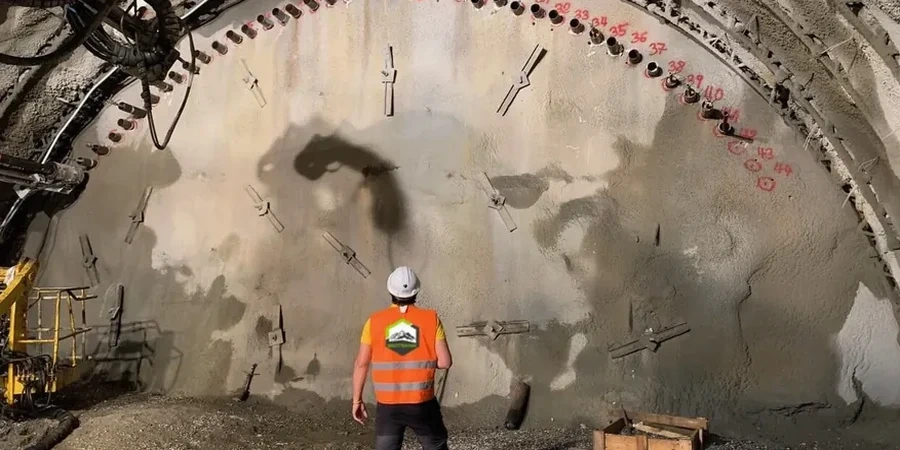
The biggest mistake we see on Des Moines job sites is treating monitoring as an afterthought. A contractor opens a cut along the Raccoon River floodplain, hits saturated fat clay, and three days later the adjacent street has cracked pavement. That repair costs more than the monitoring program would have. In downtown Des Moines, where new mid-rise construction pushes excavations right up against century-old brick buildings, real-time data is not optional. Our team runs continuous deep excavation monitoring with automated total stations and inclinometer arrays so you know the moment a wall moves beyond threshold. We also tie surface readings into test pit logs to correlate shallow fill behavior with deeper soil response. The instrumentation gets installed before the first bucket hits grade, because by the time you see a crack, the damage is already done.
Monitoring does not prevent movement. It tells you how much movement is happening, right now, so you can act before a millimeter becomes a claim.
Local context
Des Moines gets 35 inches of rain a year, and a lot of it comes in May and June. An open excavation in glacial till that looked bulletproof on a dry Tuesday can turn into a slurry-filled hazard after a weekend thunderstorm. Water softens the clay at the toe, the wall starts to kick in, and suddenly your shoring is overloaded. We track groundwater levels in observation wells and rain gauges on site, not just wall movement, because the trigger is usually hydraulic. Winter brings freeze-thaw cycles that heave surface soils and throw off survey benchmarks, so we reset control points monthly from December through March. The biggest risk is not the soil. It is the assumption that conditions will stay the same throughout the job.
Questions and answers
What does excavation monitoring cost for a typical Des Moines project?
Programs in the metro range from about US$720 for a short-term residential basement monitoring package with a few crack gauges and survey points, up to US$2,410 per month for a deep commercial excavation requiring automated inclinometers, multiple piezometers, and daily reporting. The final number depends on excavation depth, adjacent structures, and how long the cut stays open.
How often do you take readings during the excavation?
During active excavation near sensitive structures we read instruments as often as every four hours. Once the cut reaches final grade and the permanent structure starts going in, we typically scale back to daily or twice-weekly readings, always with automated alerts if any instrument exceeds its threshold.
What triggers a stop-work condition on a monitored excavation?
The threshold is project-specific, but common triggers include lateral wall movement exceeding 0.5 percent of wall height, settlement greater than half an inch on an adjacent footing, or vibration exceeding 0.25 inches per second at a historic structure. When a trigger hits, our field lead calls the superintendent immediately, and the engineer of record decides whether to proceed, modify the shoring, or stop work.
Is monitoring required by the city of Des Moines for deep excavations?
The city building department does not always mandate a monitoring plan for private work, but most geotechnical reports for excavations deeper than 12 feet in the downtown area recommend one as a condition of the design. If you damage a neighboring property and have no monitoring data, proving the movement was pre-existing becomes very difficult.