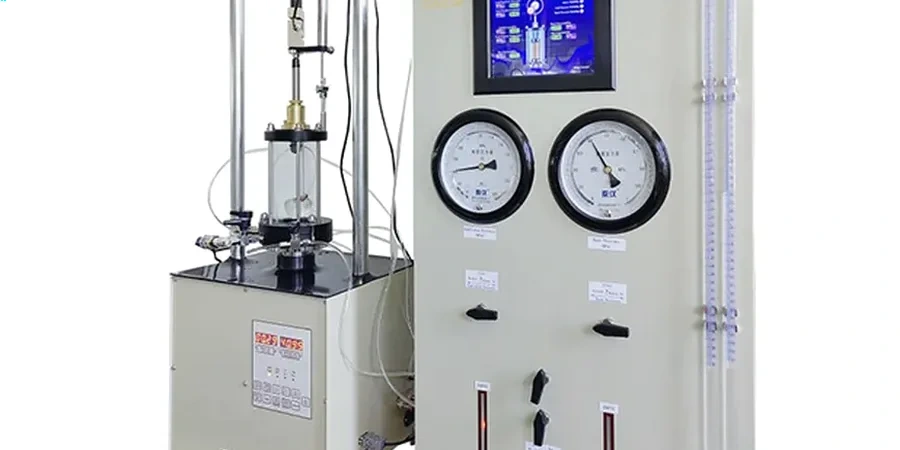
Geotechnical laboratory testing forms the backbone of any successful construction or infrastructure project in Des Moines. This category encompasses the full spectrum of analytical procedures performed on soil, rock, and groundwater samples to determine their physical, mechanical, and chemical properties. From simple index tests like moisture content and unit weight to sophisticated strength and consolidation analyses, laboratory work translates field observations into quantifiable engineering parameters. In a city where the built environment must coexist with the Des Moines River and its tributaries, understanding the behavior of subsurface materials under load and in the presence of water is not just a regulatory requirement—it is a fundamental safeguard against structural distress, differential settlement, and foundation failure.
Des Moines sits atop a complex geological tapestry shaped by repeated glacial advances and retreats during the Pleistocene epoch. Much of the metropolitan area is underlain by Wisconsin-age glacial till, a dense, unsorted mixture of clay, silt, sand, gravel, and boulders deposited directly by ice sheets. This till is often overlain by loess—wind-blown silt—particularly on upland surfaces, and alluvial deposits of sand and gravel in the river valleys. These materials exhibit significant variability over short distances, making laboratory characterization essential. The fat clays and lean clays common in the region are particularly sensitive to moisture changes, exhibiting shrink-swell behavior that can wreak havoc on lightly loaded structures, pavements, and utility lines. A thorough laboratory program, including Atterberg limits testing, helps engineers quantify this plasticity and predict volume change potential.
Regulatory compliance in central Iowa is driven by a combination of international, national, and local standards. The Iowa Department of Transportation (Iowa DOT) mandates that all materials incorporated into publicly funded transportation projects meet the requirements of their Standard Specifications, which explicitly reference AASHTO and ASTM International test methods. For building construction, the City of Des Moines adopts the International Building Code (IBC), which in turn requires geotechnical investigations to be conducted in accordance with accepted industry practice—namely ASTM standards. A typical laboratory suite for a commercial development will include grain size analysis (sieve + hydrometer) to classify the soil per the Unified Soil Classification System (USCS) and AASHTO system, as well as compaction tests to establish moisture-density relationships for engineered fill. These standards ensure a consistent, defensible basis for design across all projects, from bridge abutments to retaining walls.
The types of projects that demand comprehensive laboratory testing are diverse and pervasive throughout Des Moines. Transportation infrastructure—including the reconstruction of I-235, the Southeast Connector, and countless arterial roadways—relies on laboratory data to design pavement sections, assess subgrade stability, and select borrow sources. Commercial and residential developments in growing suburbs like Ankeny, West Des Moines, and Altoona require foundation recommendations based on consolidation and shear strength testing, especially where weak alluvial clays or undocumented fill are encountered. Flood protection systems, including levees and stormwater detention basins critical to a river city, need permeability and dispersivity testing to ensure long-term integrity. Even smaller-scale projects like cell tower foundations or solar farm installations benefit from basic index testing to validate bearing capacity assumptions. The laboratory serves as the proving ground where design assumptions are either confirmed or corrected before earthwork begins, reducing both risk and costly overruns.
A geotechnical laboratory program quantifies the physical, mechanical, and chemical properties of subsurface materials to inform foundation design, slope stability analysis, and earthwork construction. It provides the parameters—such as shear strength, compressibility, and permeability—that engineers need to predict how soil and rock will behave under structural loads and environmental conditions, ensuring safety and preventing failures like excessive settlement or bearing capacity loss.
The most frequently applied ASTM standards in Des Moines include ASTM D422 for particle-size analysis, ASTM D4318 for Atterberg limits, ASTM D698 and D1557 for compaction characteristics, and ASTM D2435 for one-dimensional consolidation. For strength testing, ASTM D3080 (direct shear) and ASTM D2850 (unconsolidated-undrained triaxial compression) are standard. Iowa DOT specifications often invoke these methods with specific modifications for local materials.
Central Iowa's glacial tills and loess-derived soils are notorious for their moisture sensitivity and variability. Laboratory testing must focus heavily on index properties like Atterberg limits and grain size distribution to classify these materials and predict shrink-swell behavior. Additionally, the presence of alluvial deposits in river valleys requires careful consolidation and strength testing to address settlement and stability concerns in floodplain developments.
A laboratory testing program is required for virtually any project requiring a building permit under the IBC, as Chapter 18 mandates a geotechnical investigation for foundation design. Public infrastructure projects governed by Iowa DOT specifications demand extensive laboratory certification of all earthwork materials. Even for smaller commercial or residential projects, lenders often require testing to satisfy due diligence and risk assessment before financing.