← Home · Underground Excavations

Geotechnical Analysis for Soft Soil Tunnels in Des Moines

Together, we solve the challenges of tomorrow.

LEARN MORE →

Plunging a TBM into Des Moines’ alluvial clays without a comprehensive ground model is the fastest way to burn contingency funds. We have seen projects stall for weeks when unexpected lenses of saturated silt collapse the face, all because the pre-construction investigation skipped critical lab testing. Our team approaches every tunnel alignment by mapping the subtle transition between the glacial till and the softer floodplain deposits that characterize the city. In our experience, combining field investigation with a solid triaxial testing program early in the design phase provides the real effective stress parameters that empirical correlations alone cannot deliver. The result is a support design that actually matches what the ground throws at you during excavation.

You cannot manage what you don't measure. In Des Moines, the difference between a successful soft-ground drive and a catastrophic face loss often lies in the undrained shear strength profile you built from triaxial data.
How we work

The downtown Des Moines skyline sits on a complex subsurface legacy. The historic re-routing of the Des Moines River and the subsequent development of the East Village area buried old channels and fill zones that make tunneling unpredictable. We routinely encounter a mix of lean clays, loose silts, and saturated sand pockets within the same tunnel cross-section. Our methodology integrates the Unified Soil Classification System (ASTM D2487) with site-specific groundwater monitoring to segment the alignment into predictable behavior units. For sections where the face stability is borderline, we often correlate our findings with in-situ permeability tests to predict groundwater inflow rates. This approach avoids the common mistake of applying a single uniform support pressure to a highly variable geology, which is the root cause of many sinkholes and surface settlements we investigate.
Geotechnical Analysis for Soft Soil Tunnels in Des Moines
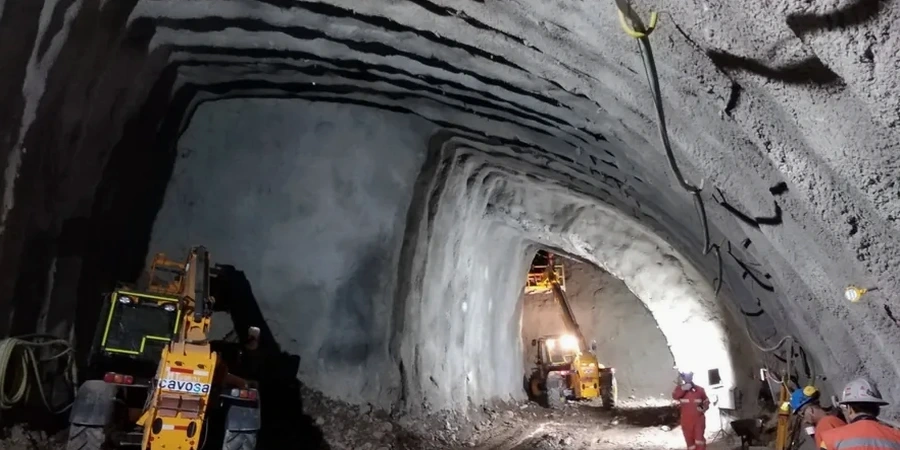
Technical reference image — Des Moines

Local considerations

IBC Chapter 18 and the referenced ASCE 7-22 standards impose strict requirements for deep foundation and excavation analysis in soft ground. In Des Moines, these codes are particularly relevant because the alluvial deposits along the Des Moines and Raccoon River corridors are susceptible to time-dependent settlement and creep. Ignoring the long-term consolidation behavior of these normally to slightly overconsolidated clays can lead to excessive surface settlement years after construction is complete. We focus heavily on the pre-consolidation pressure and the secondary compression index in our reports. A tunnel lining designed purely for short-term face stability—without accounting for the slow drainage of pore water pressure in the surrounding clay matrix—will eventually crack under the asymmetric load. That is a costly structural repair that far exceeds the initial investigation budget.

Need a geotechnical assessment?

Reply within 24h.

Email: contact@geotechnicalengineering1.org

Typical values

ParameterTypical value
Typical geologyAlluvial clays, glacial till, saturated silts
Standard test methodASTM D4767 for CU triaxial on soft clays
Undrained shear strength (Su)25-75 kPa in floodplain deposits
Groundwater effectHigh: artesian conditions possible near river
Relevant local codeIBC 2021, ASCE 7-22
Face support methodEarth Pressure Balance (EPB) or sequential excavation
Key lab index testingAtterberg limits (ASTM D4318), grain size analysis

Other technical services

01

Tunnel Alignment Geotechnical Baseline Report

We produce a comprehensive GBR tailored to the alluvial and glacial sequences of central Iowa. This includes detailed soil profiling, groundwater characterization, and baseline parameters for potential bidders. The report clearly distinguishes between the stiff till and the soft river deposits to prevent contractual disputes during the drive.

02

Laboratory Testing for Soft Ground Characterization

A full suite of advanced lab tests including CU triaxial, oedometer consolidation, and Atterberg limits. We focus on the low-stress range behavior typical of shallow urban tunnels to ensure your FEM model inputs for the lining are realistic and not overly conservative.

Applicable standards

ASTM D4767, ASTM D2487, ASCE 7-22

Questions and answers

What is the typical cost range for a soft-ground tunnel geotechnical analysis in Des Moines?
Why is triaxial testing critical for the alluvial clays found in Des Moines?

The local alluvial clays contain a significant silt fraction that affects drainage behavior during shear. A simple unconfined compressive strength test often overestimates the true in-situ strength in these soils. A consolidated-undrained triaxial test gives us the effective friction angle and cohesion intercept needed to model face stability accurately, especially right after a stoppage when excess pore pressures can build up.

How do you handle the transition zones between glacial till and soft alluvium in the tunnel profile?

We treat the transition as a critical design section. Our approach uses a closely spaced investigation grid at these interfaces, combining continuous soil sampling with standard penetration testing. We define a mixed-face behavior profile that allows the contractor to adjust the face support pressure and conditioning agents in real-time, preventing the rapid loss of ground that occurs when a machine suddenly exits stiff till and enters saturated loose sand.

Location and service area

We serve projects across Des Moines and surrounding areas.

View larger map