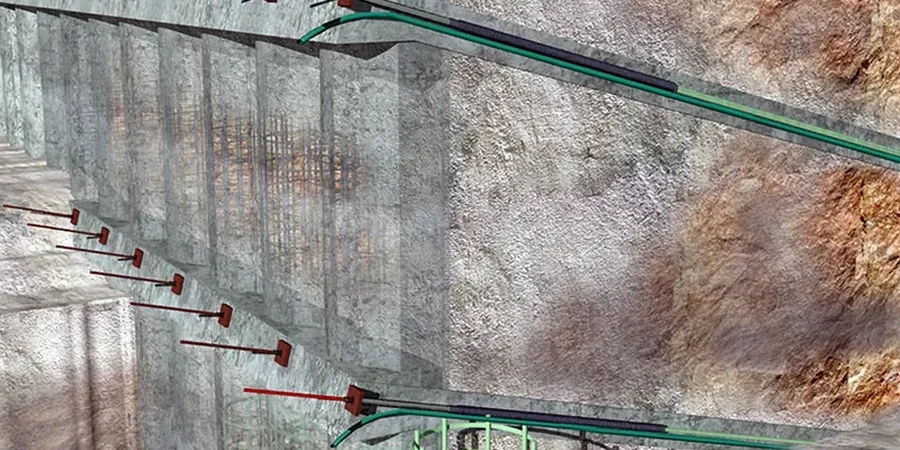
Des Moines sits at roughly 955 feet above sea level, where the Des Moines River cuts through Pennsylvanian-age shale and limestone overlain by thick glacial till. This geology creates a specific challenge for deep excavations and retaining structures: the till is stiff when dry but loses strength fast when saturated, and the underlying shale can degrade upon exposure. For tied-back walls, soil nail arrays, or rock-anchored footings, the bond capacity of an anchor depends entirely on understanding this stratigraphy. We design both active anchors---tensioned during installation to limit immediate movement---and passive anchors that engage as the ground deforms. Each project starts with a review of site-specific borehole data and in-situ permeability results, because groundwater flow through till joints directly impacts grout-to-ground bond performance.
Bond stress in glacial till varies by a factor of three depending on moisture content. Site-specific testing is not optional.